
Skip Navigation or Skip to Content
  • Windelo Blog
  • /
  • The New Windelo 50 On Test - An Innovative Catamaran
Eader modele new windelo50 yachting2 scaled

The New Windelo 50 On Test - An Innovative Catamaran

Jan 19, 2024

A few months ago, Sam Jefferson, journalist for Sailing Today magazine, jump aboard the New Windelo 50 for a sea trial at Canet-en-Roussillon. Discover this New Windelo 50 on test and first impression of our skipper!

“It may sound a bit trite to say that Windelo Catamarans have been on a voyage since it launched its first Windelo 50 in 2021, but it’s also true. I was fortunate to test sail that first boat and was suitably impressed. Setting up a new company from scratch and building a sustainable and innovative catamaran out of basalt is no mean feat. Yet what was more impressive was that the boat was superb; well executed, carefully thought out, and with a high level of finish.”

It was clear that this was a company that was going places. Indeed, Hakuna Matata, the boat I tested in 2021 has also been going places, having completed two Atlantic crossings since its launch.

The company has flourished, and two years and 25 boats later, I find myself once more out on a test sail of the Windelo 50. It feels like visiting an old friend. Yet, although the boat feels familiar, there are marked changes in the new boat compared to the original that I tested back in 2021.

Two years of production and the team at Windelo have given the boat a thorough overhaul using all the knowledge they have garnered from two years of owner feedback to refine and perfect the product.
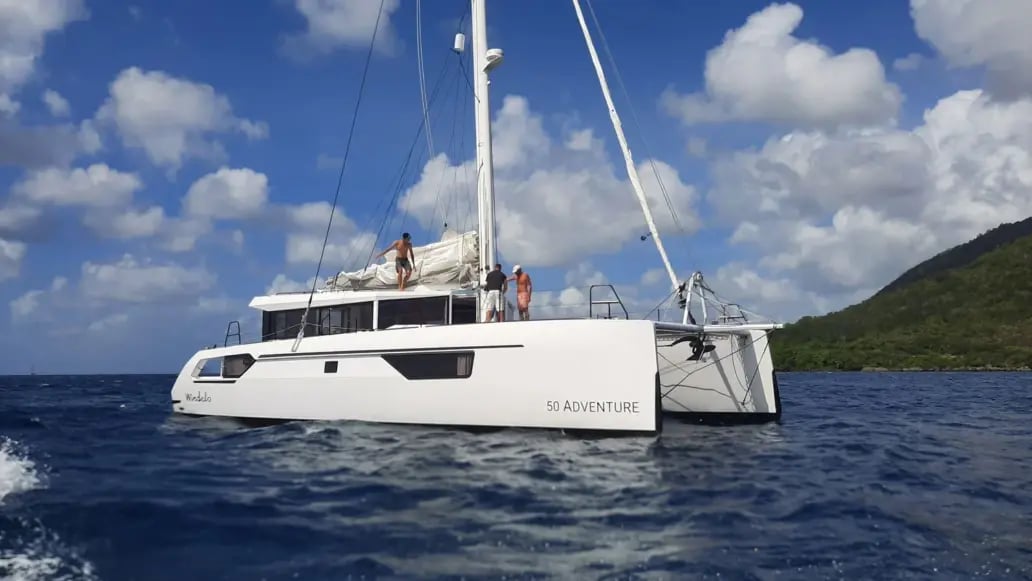
20211207-105215-uai-1032x581

Hakuna Matata, sorti en février 2021

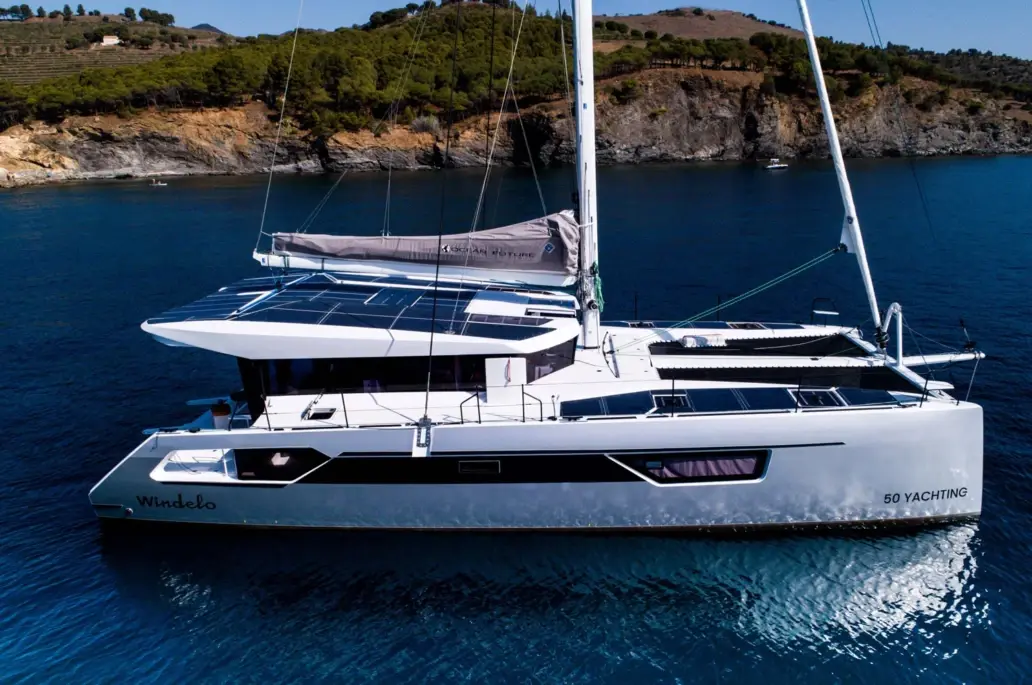
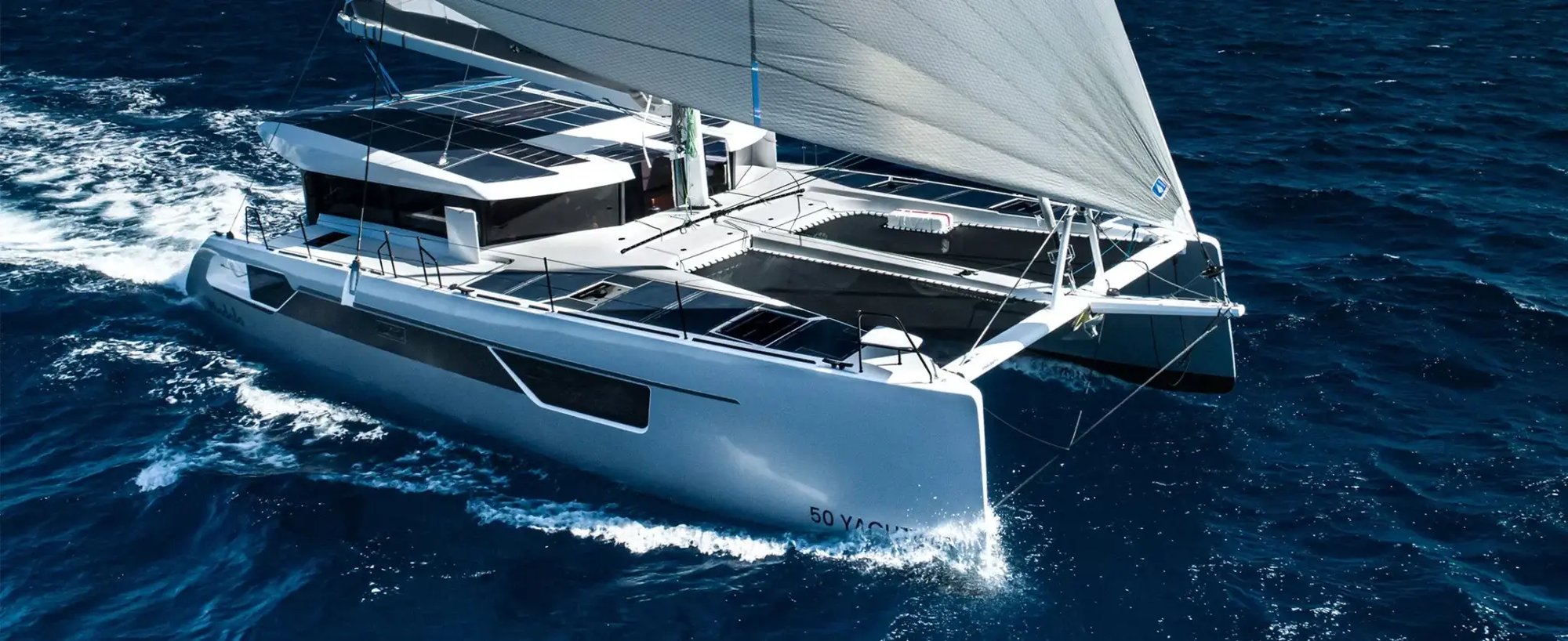
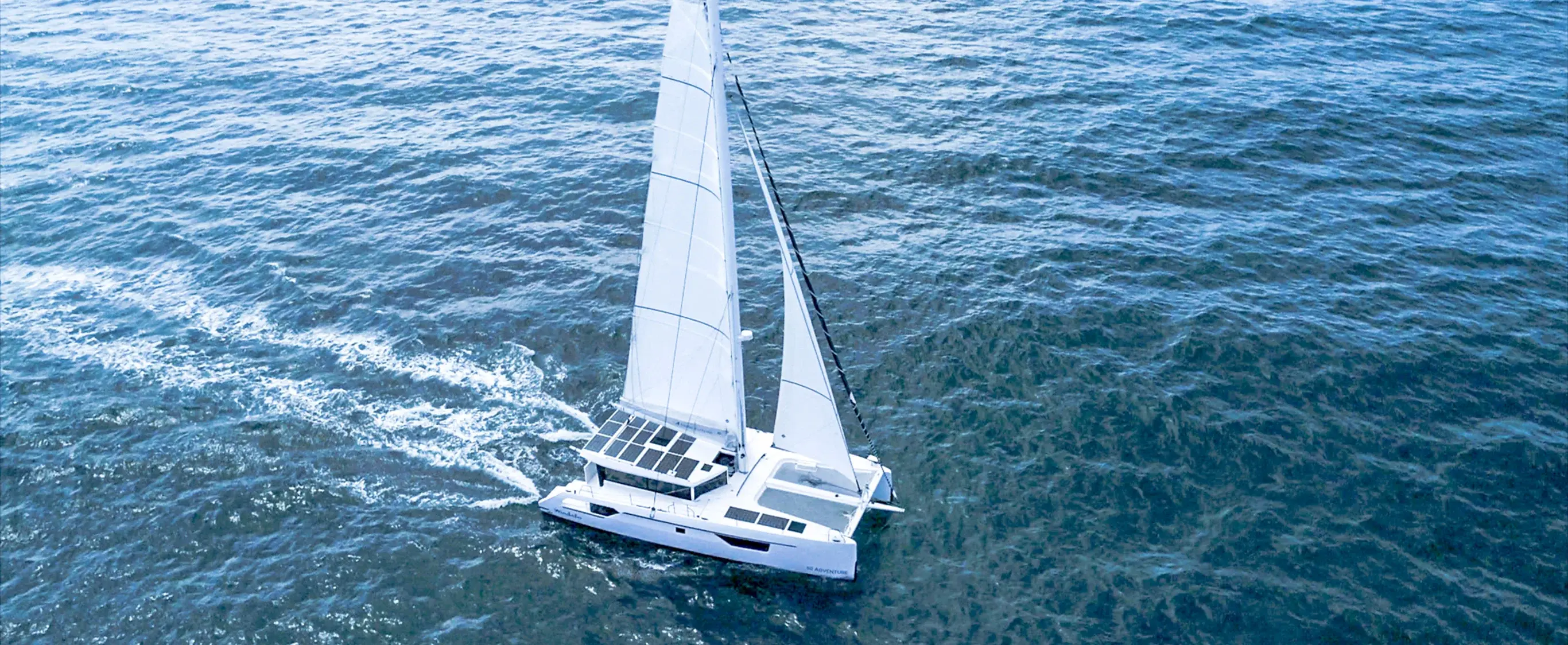
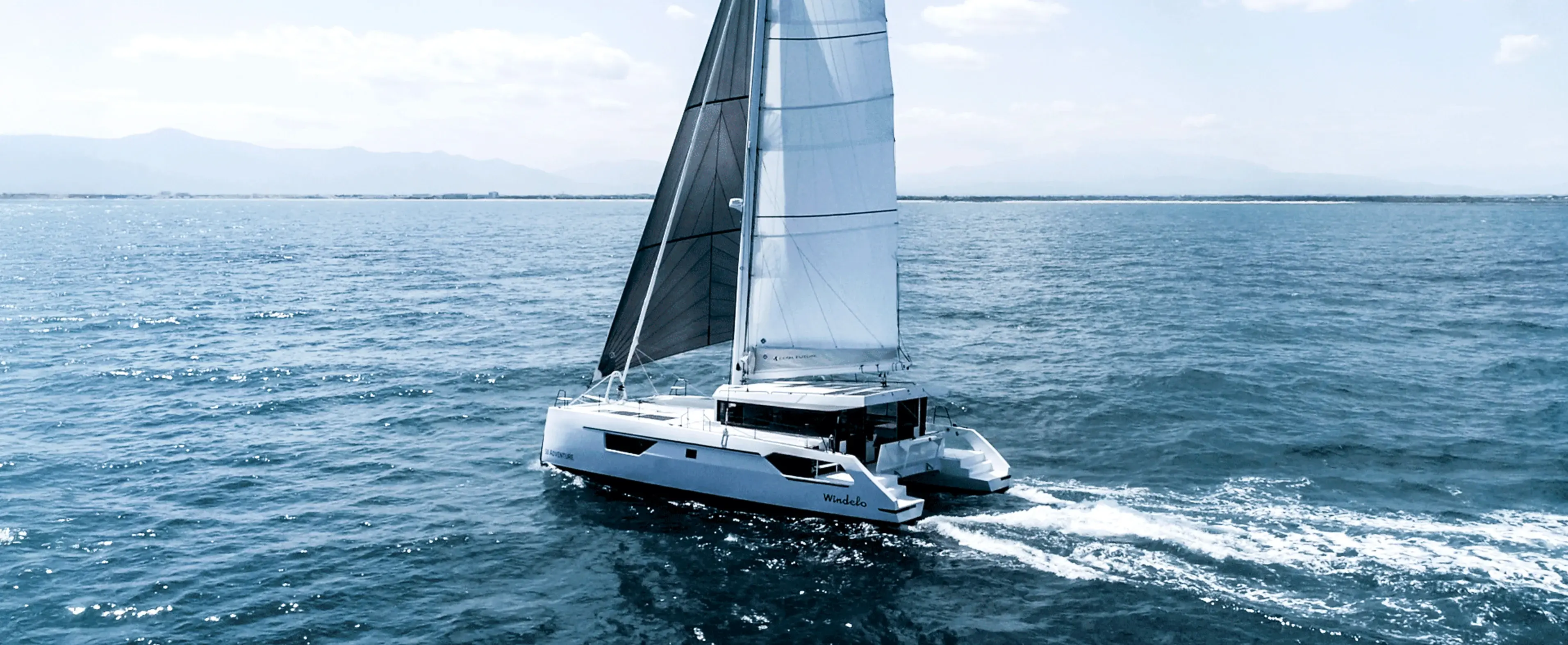
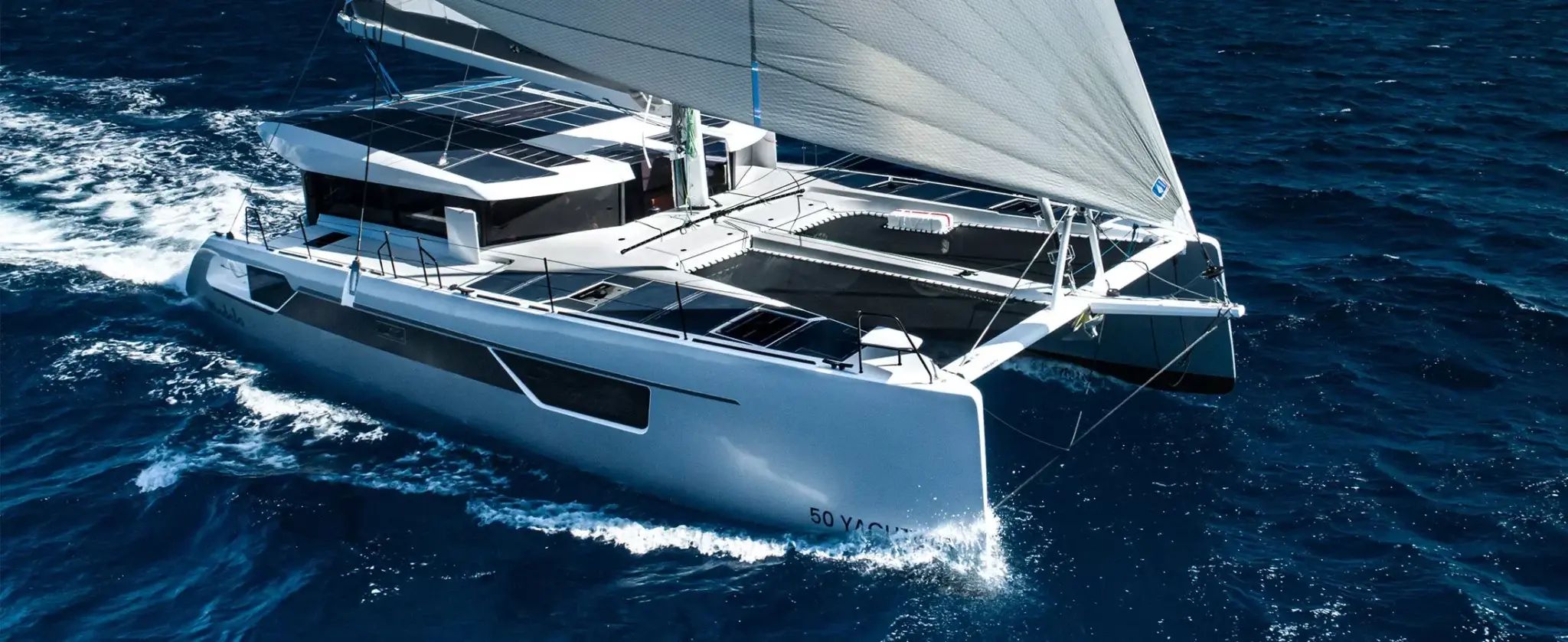
The changes are more dramatic than you might think. As a journalist, I’m often sceptical of much fanfared ‘Mk2’ launches as sometimes the changes can be subtle to the point of non-existent. This certainly is not the case with the Windelo 50Mk2. One glance at the boat from the dockside underlines that big changes have been made. Previously, the boat had a certain ‘expedition’ look to it thanks to the styling of its coachroof. This has gone and the new edition looks more sleek, more purposeful, and more aggressive.

The reason for this change in character? Simple: the yard has constructed an entirely new deck mold to go on the existing hulls. In case you’re wondering, this is a big deal, as it costs a pretty penny to construct an entirely new deck molding. If you’re wondering what was wrong with the old one, the answer would be nothing because it doesn’t exist; the MK1 Windelo had a deck constructed using several different molds which were put together like a jigsaw puzzle.

This gave the boat a certain distinctive look but it’s also understandable that the manufacturers have chosen to refine the design by going for a single deck molding. It makes for a less complicated build process and gives the deck layout more coherence.

An innovative catamaran

So, if the basic concept remains the same, what’s new? Well, quite a lot. An entirely new deck mold can be transformative. To give you an idea of the scale of change, this has reduced the number of separate component parts of the deck structure from 21 to 3. As you can imagine, that significantly increases efficiency when it comes to actually producing the yachts. From a consumer point of view, it has given Windelo the chance to go for a considerable restyle – hence the more aggressive, streamlined look of the boat when I first saw her alongside the dock.

To achieve this new look, Windelo enlisted the expertise of designer Charlotte Schiffer who worked alongside Barreau and Neuman to create a deck form that had more flow than previously and also presented a better silhouette of the boat. Looking at the boat from the dockside, the new design seemed to be champing at the bit to leave. This is down to tweaks in the styling as much as anything else.

The deckhouse windows are now subtly angled in a way that makes the boat look more dynamic even when at rest, while many of the hard edges have been smoothed out, making for a more curvaceous shape. The angled ‘wave’ which was initially only a design feature of the hull has now been adopted and continued on deck with both the coachroof and cockpit coaming repeating this design motif.

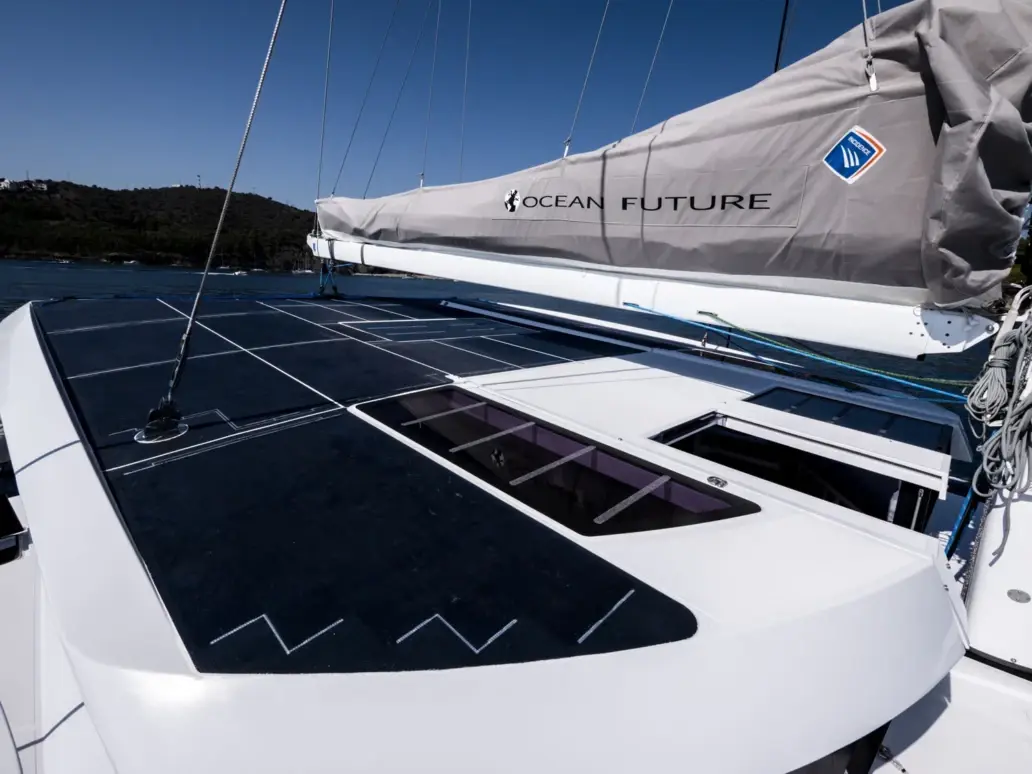
Another significant visual impact is created by the fact that the coachroof extends an extra meter aft. This makes a big impact on the styling of the boat but also has the practical benefits of providing more shade in the aft seating area, more space for solar panels plus allowing crewmembers tasked with stowing the main to be able to walk around the back of the boom – a very useful feature for those who have wrestled with these big multihull mains.

profil-3-uai-1032x685

New Windelo 50 on test - The deck

If the visual changes to the boat from the shoreside are already evident, those changes are rapidly amplified once you step onboard. The boat just feels a tad slicker and more professional.

When I first stepped aboard the original Windelo 50, I was amazed that what was essentially a start-up company had succeeded in creating a product that was so slickly put together. Yet there’s little doubt that the new deck mold has moved the overall feel of the boat up a notch.

It’s more the small details, such as the fact that the nonskid is now integrated into the mold that makes the difference here. Equally, solar panels are now shaped to fit into recesses in the deck, which is a stylish touch. There are also two extra hatches forward.

Another important detail is that the daggerboard housing is now recessed into the deck, meaning that when the boards are fully lowered, they sit flush with the deck.

p1001004-uai-1032x774

One of the most distinctive features of the Windelo has always been its forward cockpit. Multihull manufacturers have always wrestled somewhat with where to place the helm without compromising visibility. The obvious point is on the bridge deck, but this means you have to raise the boom and the whole center of gravity of the boat.

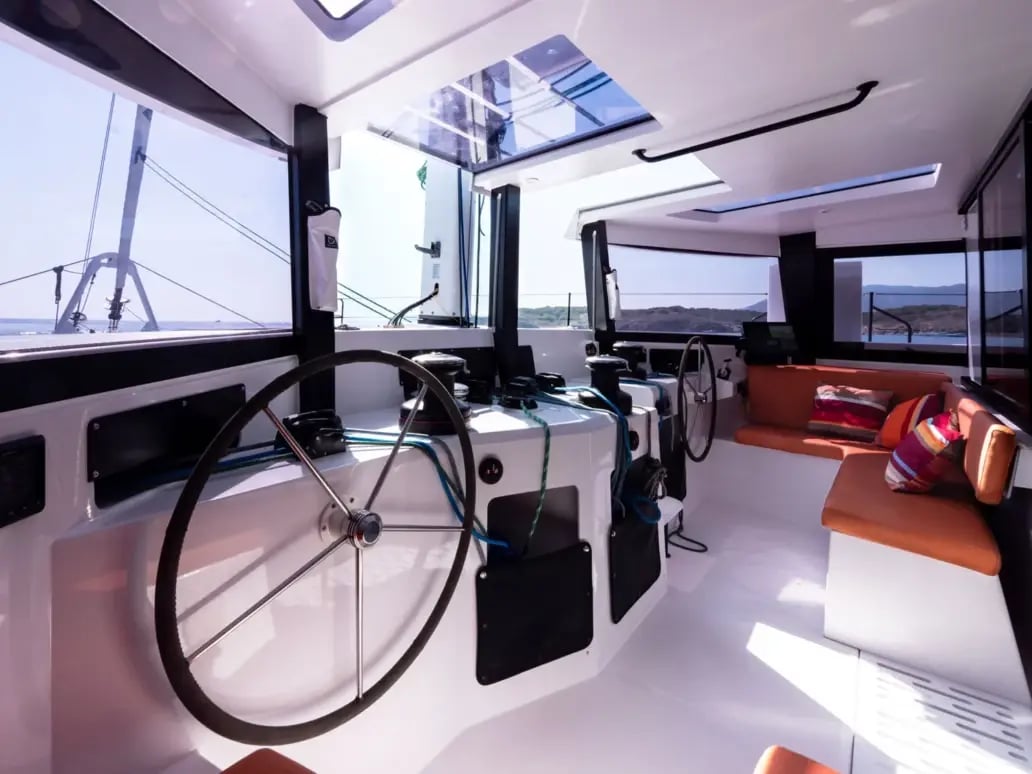
Others go for aft helms set well outboard, but these can tend to feel a bit vulnerable. Windelo went for a totally different approach and put twin helms just abaft the mast in an enclosed cockpit. This has worked well for them, striking a balance of good visibility, decent feel, a good view of the sails, plus excellent access to the running rigging.

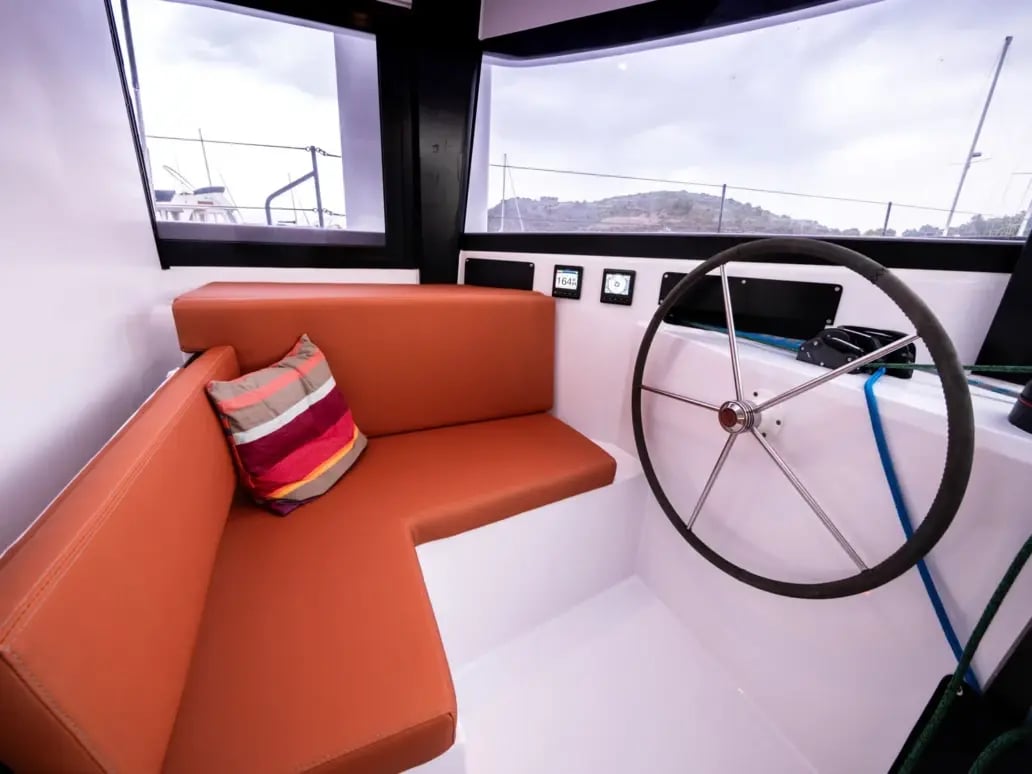
This is also an area that has been significantly refined by the new deck molding. First up, the angled mullions of the cockpit windows allow for better all-round visibility than previously and also give the whole area a greater feeling of space. Equally, the skylights in the coachroof that allow you to check the trip of the mainsail have been enlarged, letting in more light and giving you a better view of the sails.

Meanwhile, the cockpit seats have been reworked so that they feel deeper and hold you in better in a seaway. The helm’s position has also been tweaked slightly to ensure it’s in the absolutely optimal spot. The deck organizers have also been tweaked to make them even easier to use, but the setup remains the same, with all running rigging leading almost directly to the hand of the helmsman. Meanwhile, a self-tacking jib ensures that handling the boat is a breeze.

The aim is that a couple can sail the boat across oceans with ease. Both daggerboards can also be raised and lowered from here. In addition to this, the anchor winch is also right there within the cockpit, giving you a much more immediate view of what’s going on as you lower and raise the anchor.

  • cockpit-1-1-uai-1032x774
  • cockpit-5-uai-1032x774

The setup has proven a big hit for Windelo in part because it means that there is no huge barrier between the ‘sailing’ area of the boat up forward and the saloon, which can be reached via wide sliding ‘patio’ doors. It’s a blending of sailing and relaxing areas that works better than most, while the forward cockpit also feels secure in a blow. As if to underline this, there are well-positioned handholds running fore and aft, while the huge cockpit drain would deal with any stray waves that snuck in.

Back aft, there is more shade – and equal protection from rain – than before, thanks to that elongated coachroof, but beyond that, the whole aft section has been significantly remodeled. The clever setup for raising and lowering the tender has been retained but remodeled. This essentially involved the aft section of the deck pivoting as part of a davit for the dinghy.

This means that when you are sailing, the back deck is raised, thereby enclosing the cockpit, while at anchor, the dinghy is lowered, and the aft deck almost doubles in size. The remodeled version of this clever setup has been rounded off at the corners and feels like a piece with the rest of the boat’s styling. The aft steps have also been reshaped with more curves – both as a point of style but also to make it easier to get on and off the boat.

It’s also worth noting that the upgraded deck design has paid special attention to the runoff of water, with improved guttering ensuring the boat is drier in a seaway.

hqdefault-1

Down below

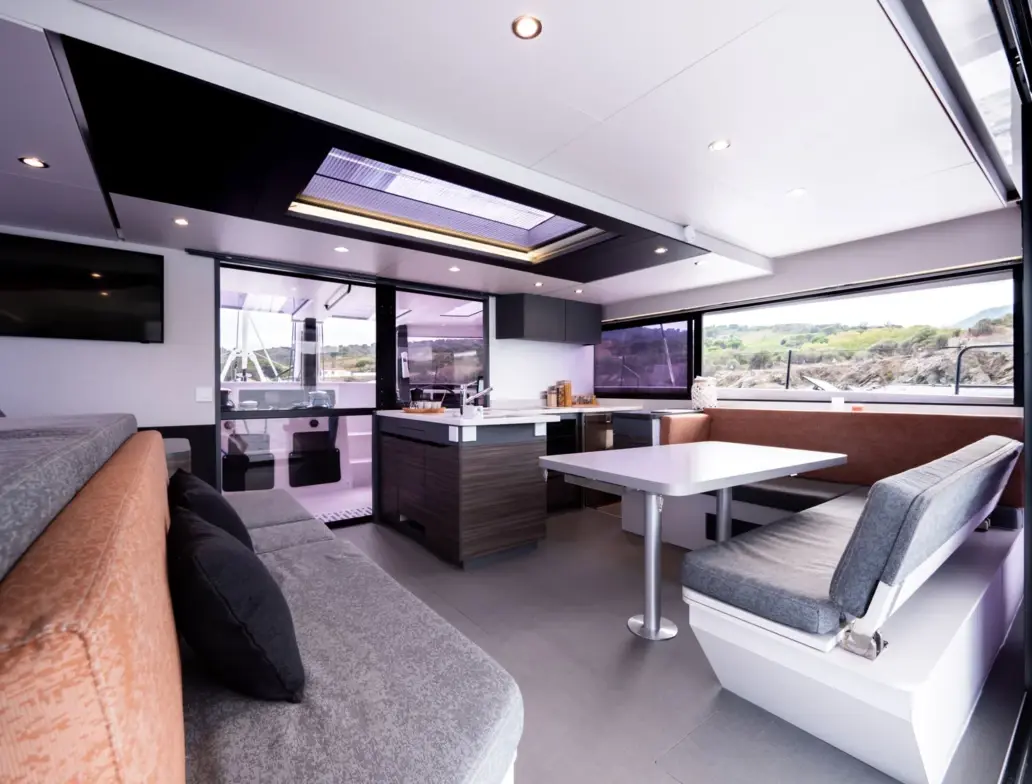
Down below is a total misnomer with this boat because the forward and aft cockpits blend seamlessly with the saloon. With the sliding patio doors forward open to the forward cockpit and the aft tilt/slide ‘garage door’ open, you have a simply huge living space.

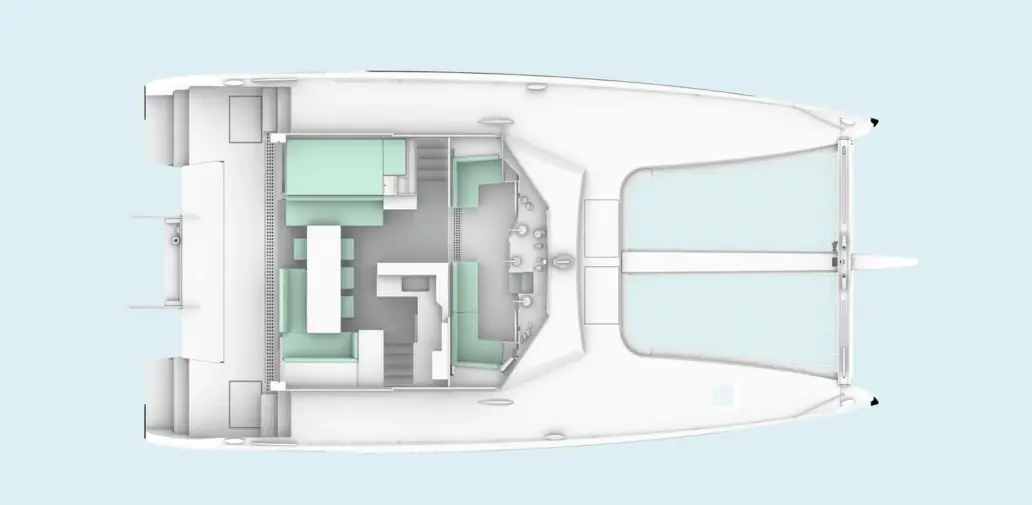
In terms of the interior fit-out, there has been less of a radical revamp with the interior, and the aim here has been simply to provide better continuity with styling, less customized work, and a greater range of fabrics and finish. The test boat featured an L-shaped galley to starboard with a dining table for up to 10 people aft of this.

carre-1-uai-1032x784

There is also an optional U-shaped galley with a main seating area to port. Either arrangement features a huge double pilot berth above this where you could happily lounge on watch and keep an eye on things with the autopilot doing the hard work for you. Forward of this berth is a modestly dimensioned chart table to an area with a clever flip-around seat and a big flat screen TV mounted to the forward bulkhead also doubles as an instrument readout while you are underway, making navigation and watch keeping – particularly at night- very practical with all the information at your fingertips.

w50-cuis-l-table-8-ss-tac-plf-ouverte-uai-1032x505

L-Shaped galley

w50-cuis-l-table-8-ss-tac-plf-ouverte-uai-1032x505

U-Shaped galley

The finish was excellent, and the notable upgrade was the styling, which was just that little bit more slick, with the wave motif seen in the hull and deck design cleverly incorporated into the interior design, too.

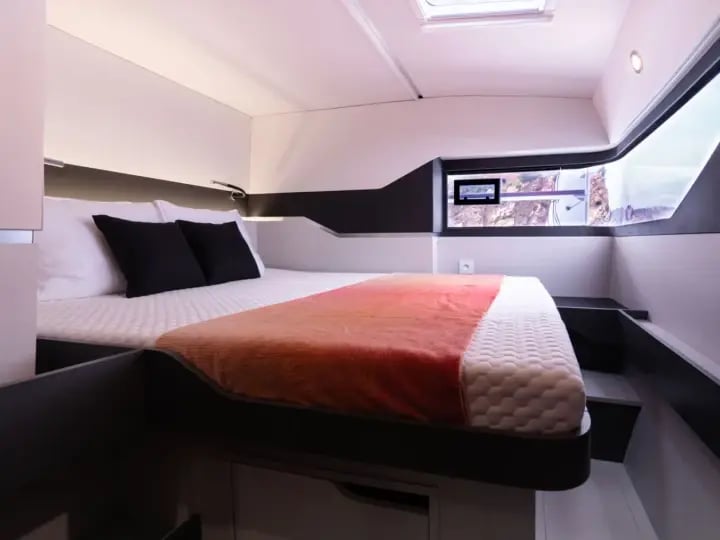
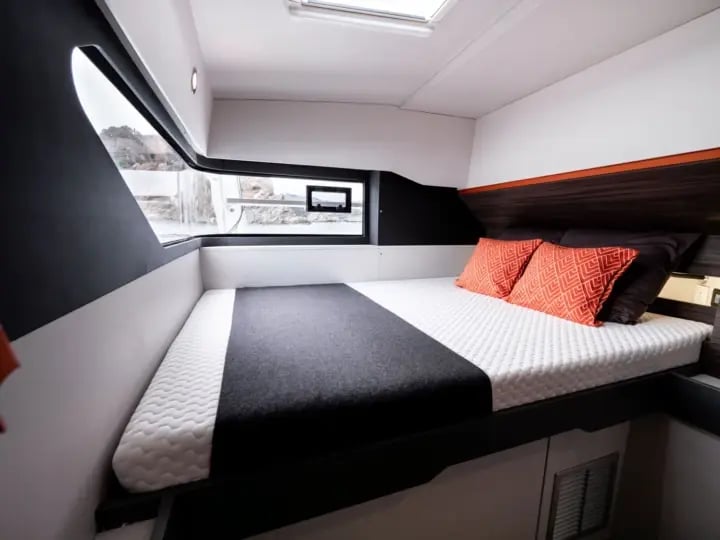
The port hull is devoted to the owner’s suite and, in standard form, runs the full length of the hull. The double berth is set in the aft section of the hull and runs athwartships. The huge curved portlights provide masses of lights and also excellent views. Storage is also good, and access to the bed is also excellent.

How comfortable an athwartship’s berth would be on a catamaran in a big swell fell beyond the parameters of this test, unfortunately. Forward of this was a small office space with a desk, which was a nice touch and shows just how practical these boats are for those who are looking at a ‘work from boat’ lifestyle.

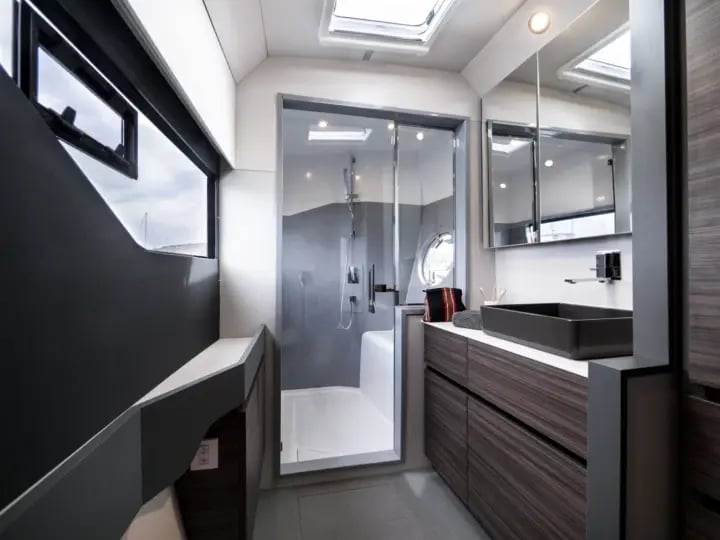
Almost the entire bow of the forward hull is devoted to the ensuite heads and shower, which is simply huge. Their shower cubicle is substantially larger than in many homes and is set right in the bow with the heads set aft.

The starboard hull features twin double cabins, both well dimensioned with separate heads and shower cubicles in the corridor running between the two. This setup is undoubtedly the one that most owners will go for, but there are variations on the theme available. It’s also worth noting that the amount of storage available was impressive.

  • cab-bd-1-uai-720x540
  • p1000923-uai-720x540
  • cab-ar-td-uai-720x540

New Windelo 50 - The sailing test

We sailed out of Canet en Roussillon on a varied day, with the wind peaking at about 15kn. This was good news as I had tested the original Windelo 50 in very modest breezes, so it was good to get a feel for the boat in a bit more of a blow. It’s worth noting that in light winds, the boat can pretty much match the windspeed – although, obviously, I wasn’t expecting that in heavier conditions.

First, though I should mention that getting out of the marina under electric motors was a pleasure; no noise, no fuss. The helm position also works well for maneuvering in tight spaces, with the central positioning and big windows all around ensuring that there are no glaring blind spots when maneuvering. Having the helm in the middle of the boat also helps the maker.

The boat feels smaller when you are in a tight space which is psychologically quite useful.

eader-modele-new-windelo50-yachting2-scaled

Green machine

If you’re worrying that two years may have watered down some of Windelo’s green credentials, think again; they remain impeccable, and two years of testing in the exacting forum of the world’s oceans has underlined that hybrid diesel–electric systems genuinely work on fast cruising catamarans (you can watch all the explanations on video). Hakuna Matata, the first Windelo 50, only used just 800 liters of diesel during a voyage of 2,000nm, including that used for heating in the colder sailing areas.

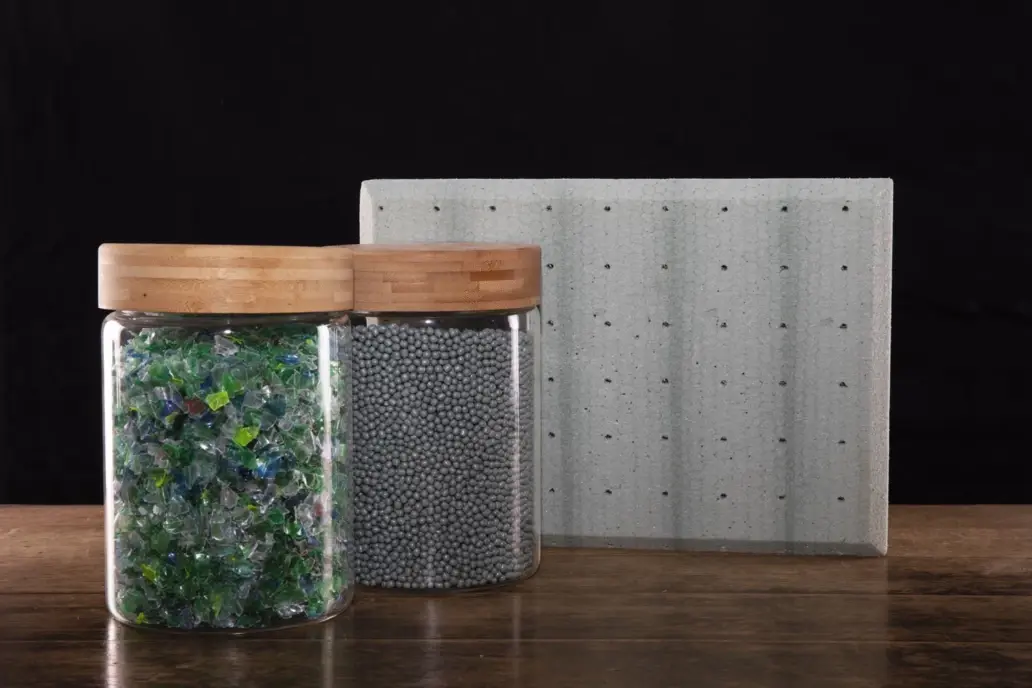
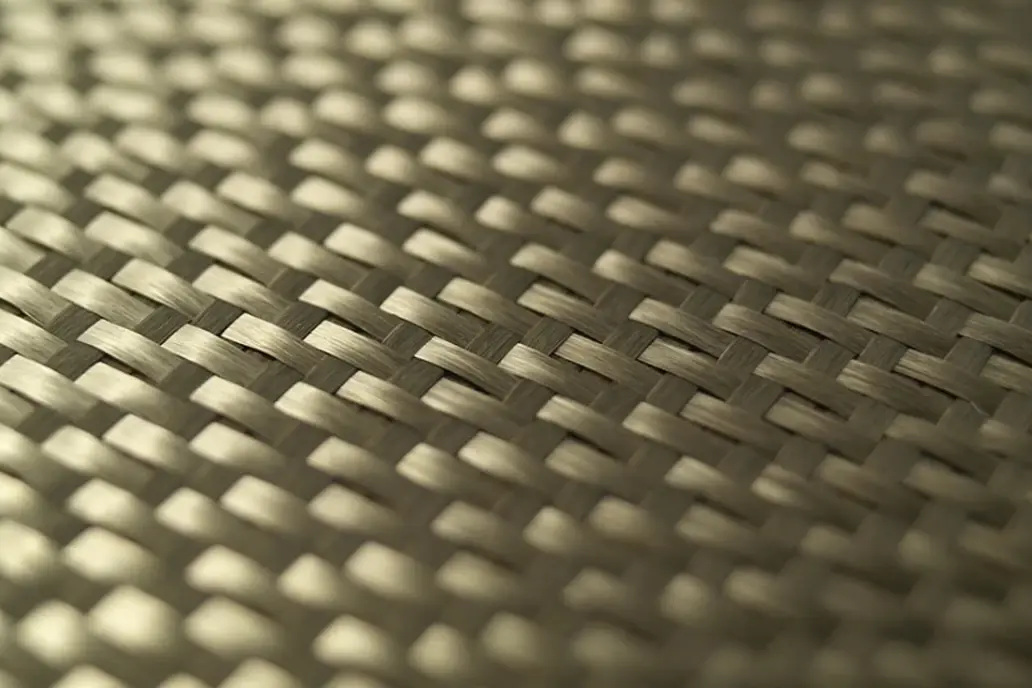
As a refresher on what makes the Windelo so green compared to competitors, well, for starters, the boat is constructed using woven rovings that are much the same as those used in fiberglass or carbon fiber. The difference is that these fibers are made out of volcanic rock. Many shook their heads a couple of years ago when Windelo adopted this construction method, but the results have been rock solid – if you’ll pardon the pun.

Sustainable PET coring was then used instead of traditional foam, and the plywood for interior fittings was selected from ethically sourced wood. None of these principles have changed from the original model, nor has the use of twin shaft driven 20KW electric motors backed up by MaxProp hydroregenerating propellers, solar panels, and, as a last resort, a diesel generator.

1-pet-les-3-hd-copie-uai-1032x688

PET foam

fibre-de-basalte-uai-1032x688

Basalt fiber

Upwind, we were hitting 7kn and sailing about 40 degrees off the wind. The helm on these Windelos is a pleasure compared to many rival big cats.  The combination of rod and Dyneema line works very well, and there is a nice feeling of connection with the elements. It’s worth noting that, although the cockpit is enclosed, you can slide open enough windows to ensure that you feel well connected with the elements, which is one of the most important aspects of sailing.

The light, responsive feel of the wheel also enhanced the enjoyment, and at times, I felt like I was at the helm of a much smaller sporty cat. Of the wind, we put the gennaker up and were soon hitting 10kn in 15kn of true wind. Sail handling was very simple, and It all made for a thoroughly enjoyable sail.

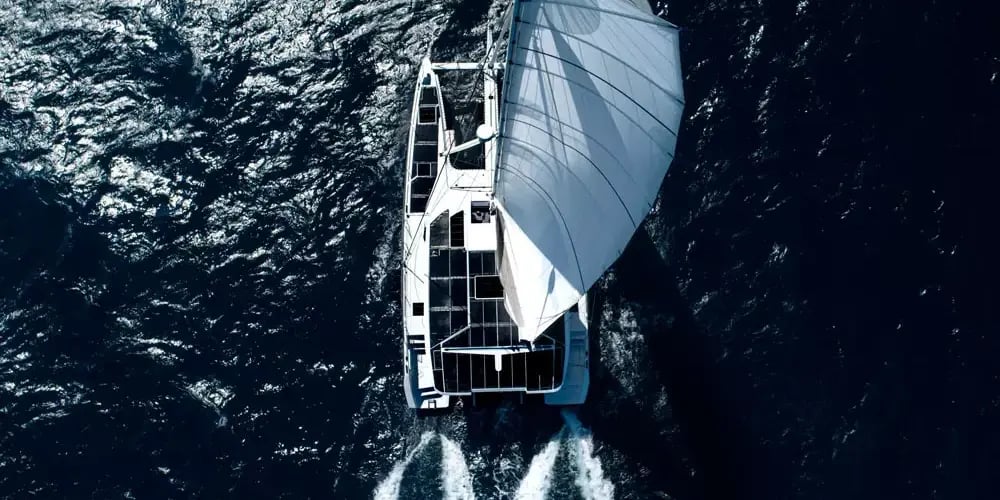
newwindelo50adventure-2-uai-1000x500

New Windelo 50 on test - Sam's verdict

The Windelo 50 was a mighty impressive boat for a first launch from a new company. The new deck molding and other refinements have merely embellished an already excellent product. The styling both on deck and below is impressive, and the more aggressive look is perhaps in keeping with the boat’s high performance, and the overall feel is slicker, more purposeful and more stylish. Ultimately, though, what truly sets this boat apart is what has always set it apart: it’s green credentials – and they remain as impressive as ever.

Articles similaires

Windelo 50 sustainable option by the Journal du Nautisme
Windelo 50 sustainable option ...
WINDELO 50 elected European Yacht Of The Year 2022 Special mentioning “Sustainability”
WINDELO 50 elected European ...
Brochure-1

La brochure Windelo

Si vous souhaitez télécharger la brochure de notre gamme de catamarans, laissez nous votre adresse email et cliquez sur le bouton télécharger !