
What is Posidonia?
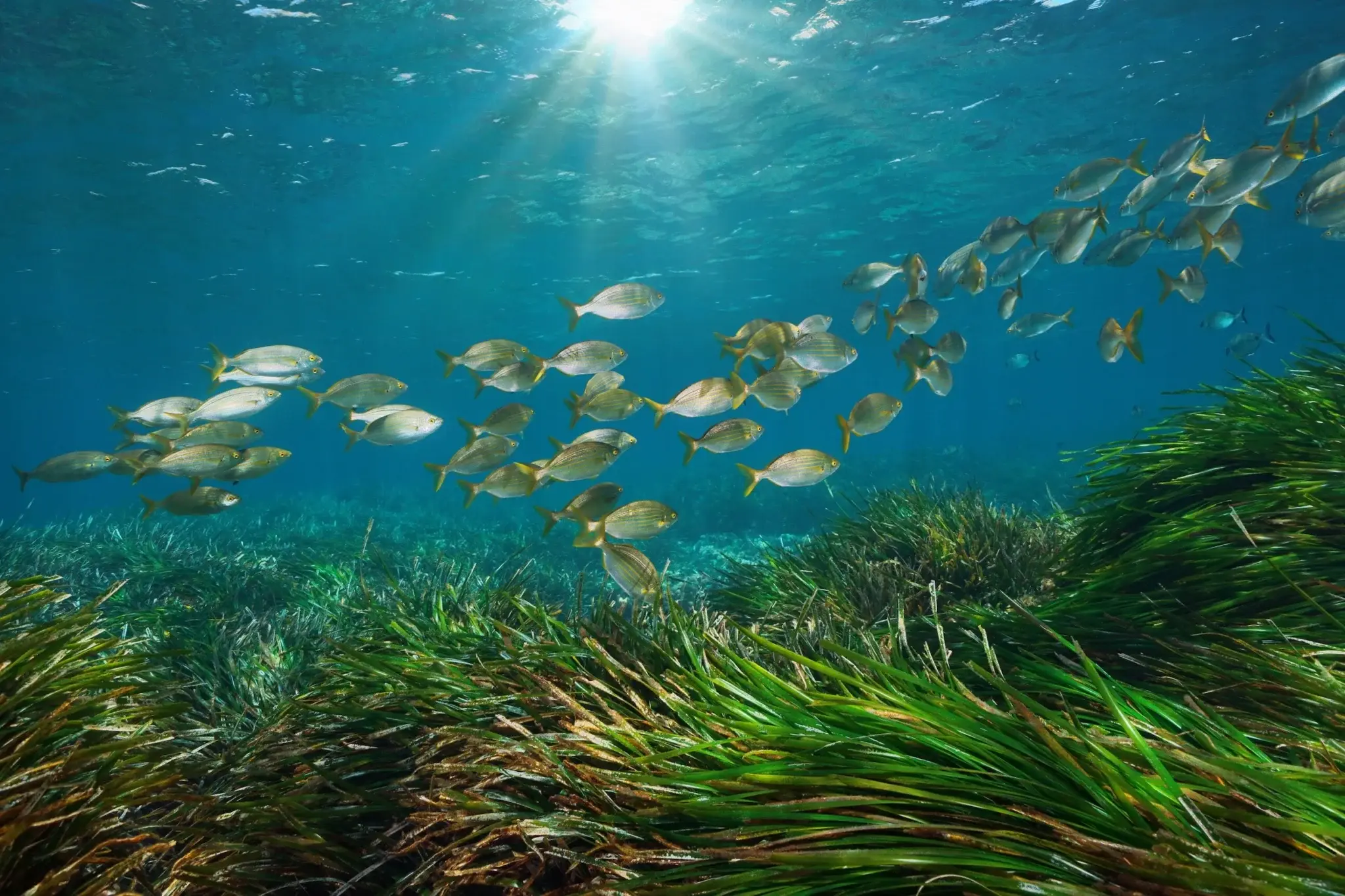
Posidonia oceanica, commonly known as Neptune grass or Mediterranean tapeweed, is a critical species of the coastal marine ecosystem. Exclusively present in the Mediterranean Sea, this aquatic flowering plant forms vast meadows called seagrass beds. Posidonia is a protected species that captures up to 5 tonnes of CO2 per hectare per year, as much as the Amazon forest! The free-floating fruit is known in Italy as “the olive of the sea” (l’oliva di mare).
Posidonia seagrass beds are crucial habitats across the Mediterranean and play a role in protecting the whole planet. Their disappearance would have a considerable impact on the environment and humans.
- Nearly 400 plant and 1000 animal species use them for shelter, food, reproduction, and growth.
- Their influence on neighboring ecosystems is vital for food and larvae production.
- They naturally reduce the force of the swell by the underwater reliefs created and, therefore, the erosion of the coastline. The dead leaves of Posidonia also allow the natural formation of benches, which protect the beaches from wave action.
- They trap sediments, thus contributing to the clarity of the seabed.
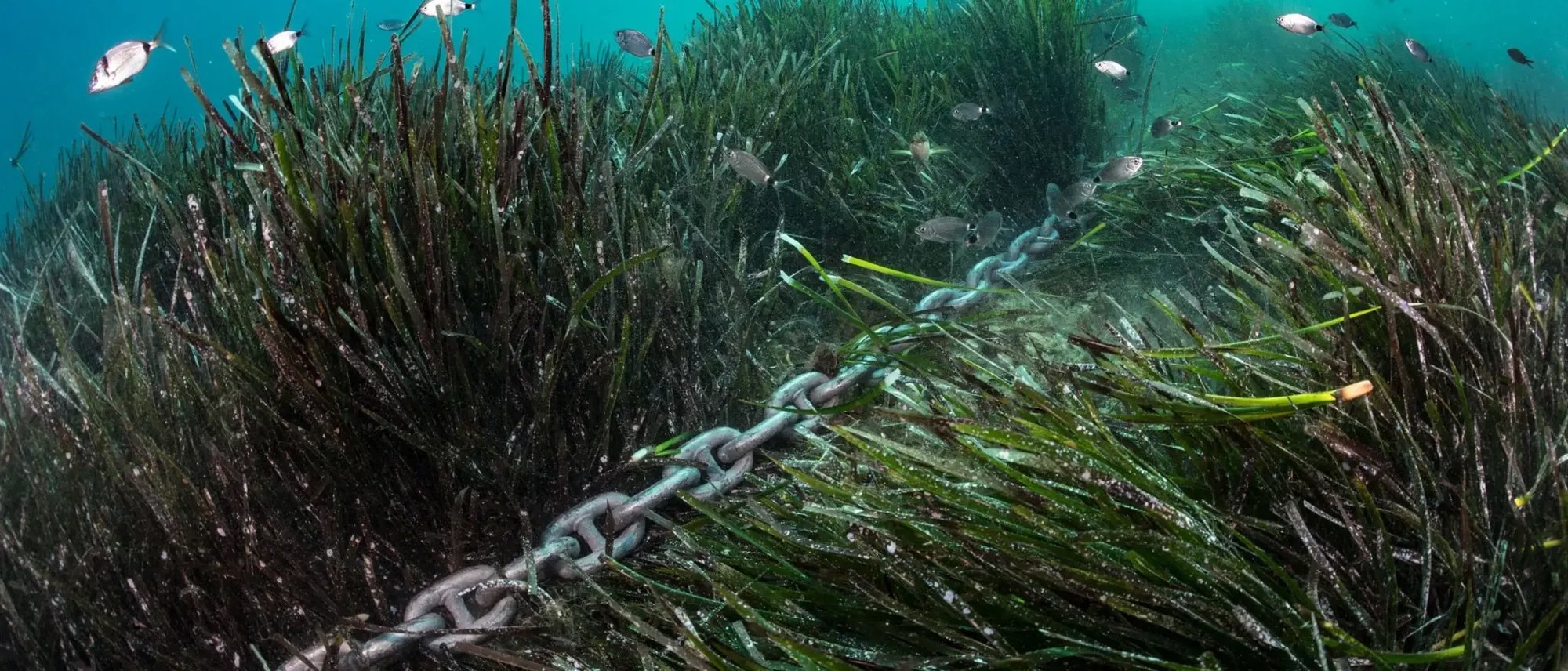
The artificialization of the coastline, global warming, trawling, the introduction of invasive species, and the anchoring of pleasure boats are leading to its decline. In 50 years, 34% of the seagrass surface has disappeared in the Mediterranean. It is essential to protect it through simple habits to adopt, particularly on a boat:
- use the Nav&Co and Donia apps to find out about the seabed,
- anchor on mooring buoys or, failing that, in sandy areas,
- provide sufficient chain length,
- raise the anchor directly above the boat,
- …