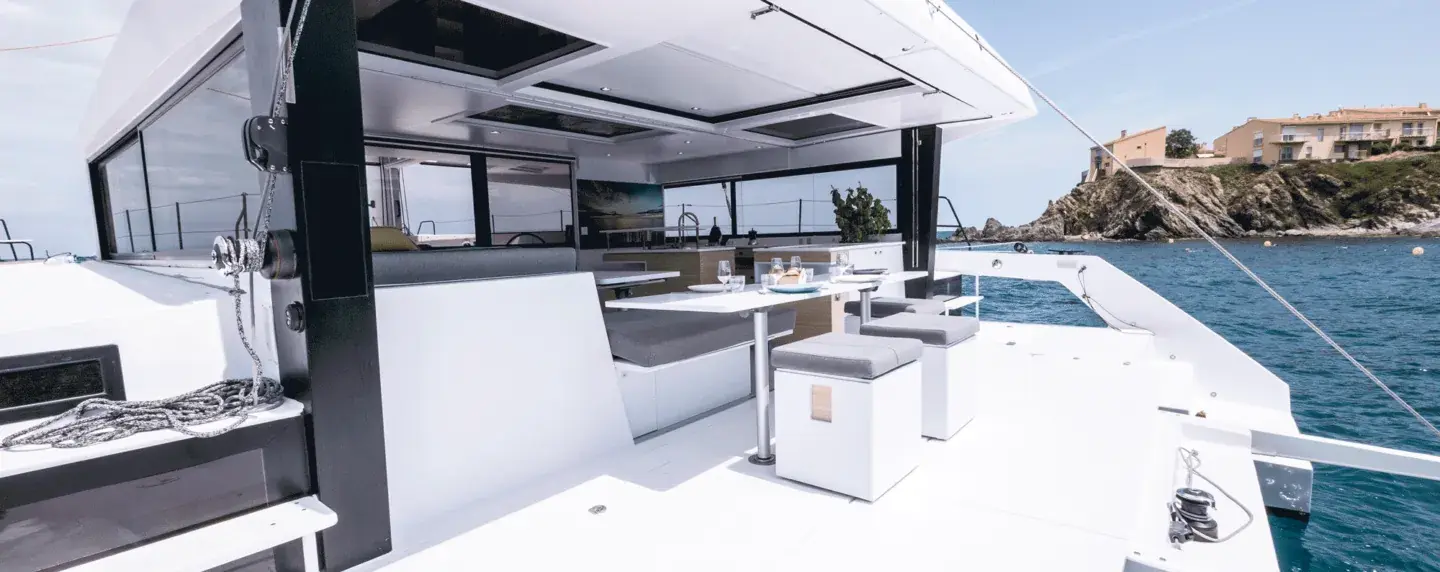
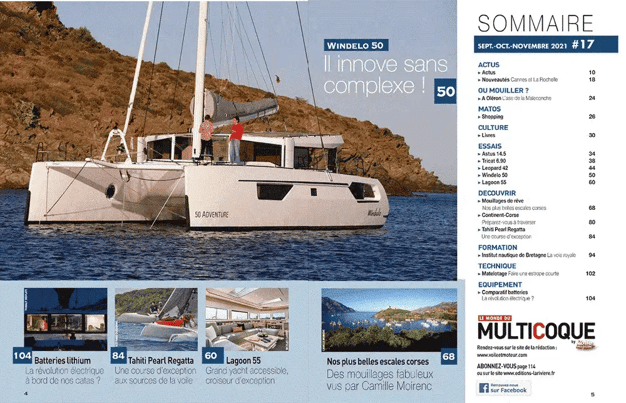
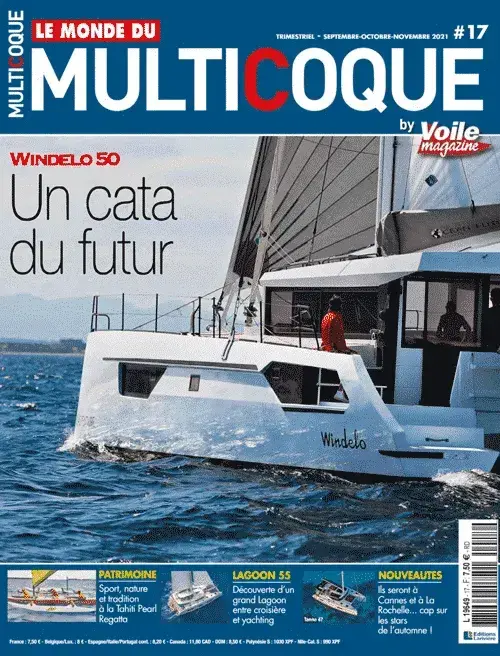
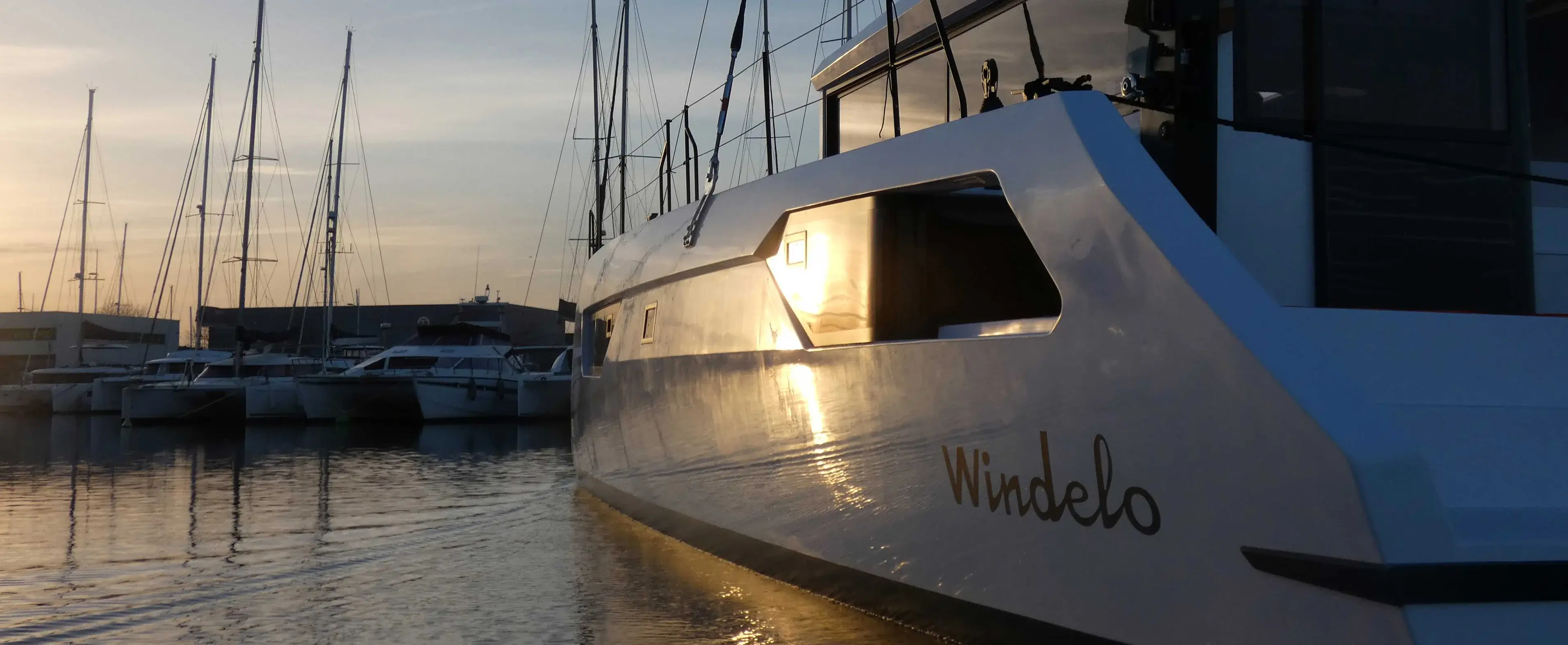
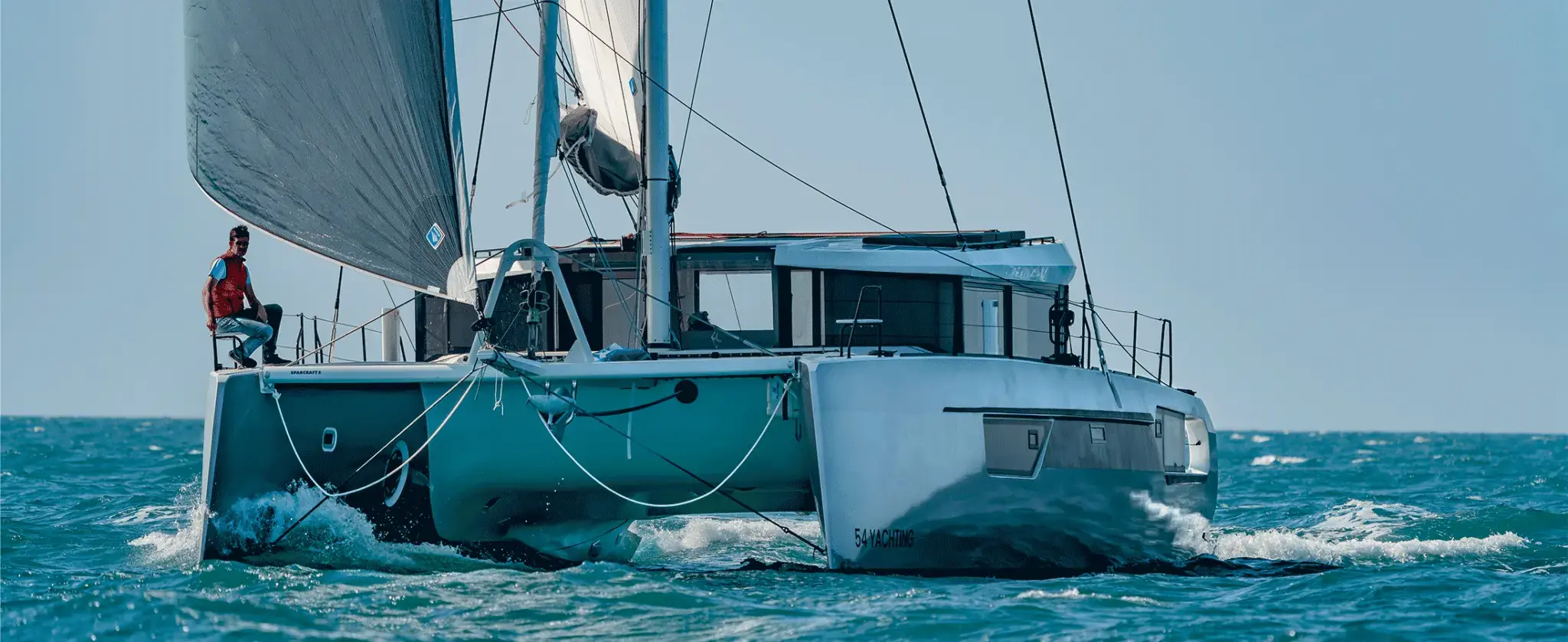
The highly anticipated Windelo is a small revolution. Its fundamental reorganization of onboard spaces and the natural approach with which it is built are noteworthy, reflecting the constant questioning that led to its creation.
This very first Windelo 50 held more than a few surprises for us during this test, and mostly pleasant ones. The most obvious one struck us as we crossed the Spanish border and sped along, propelled by a good breeze towards Cap de Creus. In a single stride, I left the cockpit, located at the foot of the mast, to join the saloon without ever losing sight of the water to windward or leeward, in our wake, or, most importantly, ahead of our bows. I must admit that I have never sailed on a cockpit offering such visibility of the water. Blind spots are practically nonexistent.
The only identified issue is related to what remains of the bulkhead between the saloon and the cockpit. Indeed, from the helm seats, these two small panels obstruct the view of the wake – but is that a problem? – and, conversely, prevent the cook from monitoring the starboard bow, or the crew member on the watch bunk from seeing the port bow. This blind spot should soon disappear, as the shipyard plans to open up these two non-structural half-bulkheads, each with a large plexiglass panel. […] This first unit, built by a shipyard created by entrepreneurs from outside the nautical industry and launched just two years ago (see inset), demonstrates great maturity in its design and construction.